A Quick-Deploy Fire Weather Station


Overview
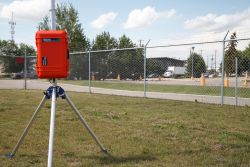
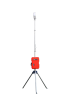
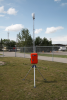
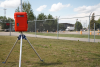
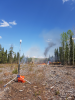
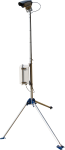
The Quick Fire Remote Automated Fire Weather Station (RAWS) is engineered for rapid deployment. It is ideal for providing hyperlocal data on-site at prescribed burns, densifying weather coverage in high-risk regions, or supporting any temporary installation for fire operations where time is critical.
The system is designed for fire management teams who need speed and simplicity in the field. The entire system can be fully deployed by a single operator in under 30 minutes with minimal tools or technical expertise required.
Based on the Canadian Forest Fire Danger Rating System (CFFDRS), the Quick Fire comes pre-programmed to calculate and output key fire weather indicators, including:
- Fine Fuel Moisture Code (FFMC)
- Duff Moisture Code (DMC)
- Drought Code (DC)
- Initial Spread Index (ISI)
- Buildup Index (BUI)
- Fire Weather Index (FWI)
- Fire Danger Code (FDC)
Read More
Measurements
This system typically measures the following parameters:
- Wind speed
- Wind direction
- Air temperature
- Relative humidity
- Rainfall
- Barometric pressure
- Solar radiation
- Lightning strike count and distance
- Solar radiation
Benefits and Features
- Ultra-rugged construction for use in all field conditions
- Pre-wired for fast installation with minimal preparation
- Pre-programmed with key fire weather indicators
- Research-grade measurements
- Lightweight for easy transport
Images
Similar Products
Detailed Description
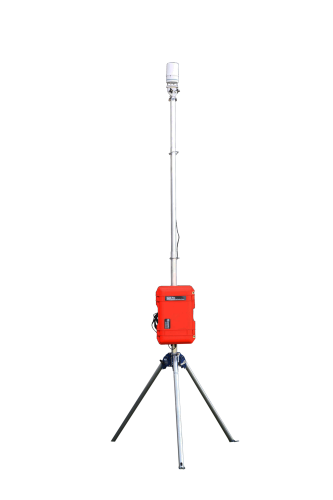
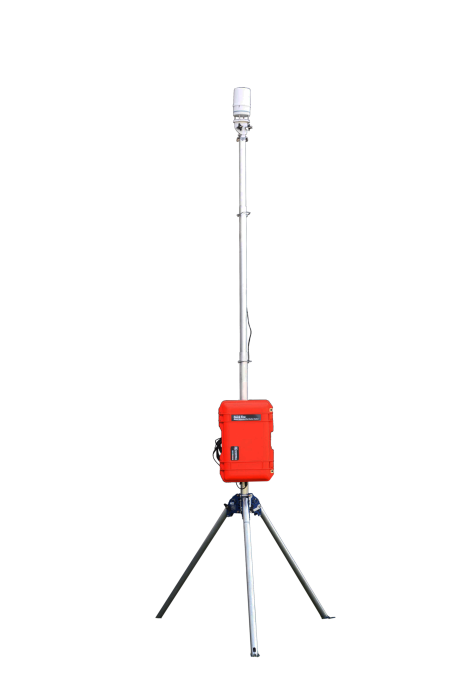
The Quick Fire arrives ready to go, so you can begin monitoring critical fire weather conditions quickly. It is pre-programmed to measure all the key weather variables that matter most for fire response and preparedness. It continuously reads and outputs raw measurements of wind speed, wind direction, air temperature, relative humidity, rainfall, barometric pressure, solar radiation, and lightning strike count and distance. A built-in tilt sensor helps you ensure the station is level for accurate measurements.
The Quick Fire arrives pre-wired so that you can start collecting high-quality data in 30 minutes or less. All you need to do is set up the tripod, then mount, orient, and plug in the all-in-one sensor.
Designed around the Canadian Forest Fire Danger Rating System (CFFDRS), the Quick Fire automatically calculates and outputs the critical fire weather indicators you rely on for informed decision-making, including FFMC, DMC, DC, ISI, BUI, FWI, and FDC.
The Quick Fire uses high-quality, research-grade data logging and sensor components so you can trust that you are getting reliable and accurate hyper-local data wherever you deploy the station.
Communications Options
- USB direct
- Wi-Fi client or access point (ideal for short-range, wireless IP communications)
- Cellular (remote IP)
- Cellular and satellite backup (remote IP)
- Cellular, Wi-Fi, and satellite (remote IP)
With any of the remote IP communications options, the Quick Fire system pairs well with CampbellCloud™ to access data through the cloud web page. CampbellCloud provides a secure and resilient cloud-based service for remotely managing environmental monitoring station networks. With cross-browser compatibility and no software to install, CampbellCloud is accessible to everyone and provides a modern, easy-to-use user interface.
Check out our example cloud dashboard for fire weather applications under the demo account. Contact us for more information about CampbellCloud.
Communications Options and Data Access
There are a variety of communications options to allow access to your Quick Fire data:
Quick Fire Basic
The most basic communications option allows you to use PC400 or LoggerNet to connect directly to the Quick Fire datalogger over USB to configure the station, view your live data, and download historical data to your computer. This basic connection type does not require any network infrastructure. This is a great solution for those who need a simple, reliable connection and are able to visit the station regularly to collect historical data or who would be in close proximity to the station to read live data.
Quick Fire Basic Wi-Fi
Creating a Wi-Fi hotspot enables you to connect to your station through your mobile phone using LoggerLink, PC400, or LoggerNet as long as you are in range. The effective range depends on site conditions. You can also continue to connect directly using the on-board USB port.
Quick Fire Basic Cellular
If your site has cellular coverage, you can use the cellular option with the integrated CELL205 to enable two-way, off-site communications with your Quick Fire station over IP. The Quick Fire system includes a pre-installed SIM card, allowing for immediate, out-of-the-box deployment. This option is compatible with CampbellCloud, PC400, and LoggerNet for data access.
Quick Fire Satellite-Ready Cellular
The Sat-Ready Cell option includes a CELL205 cellular modem and the connections for adding the satellite expansion module (purchased separately). The Sat-Ready Cell would be a great option for those who aren’t sure if they have cellular reception at the site and may need to rely on satellite communications. This option is compatible with CampbellCloud, PC400, and LoggerNet for data access.
Quick Fire Satellite-Ready Wi-Fi and Cellular
The Sat-Ready Wi-Fi and Cell option includes a CELL205 cellular modem, integrated Wi-Fi, and the connections for adding the satellite expansion module (purchased separately). The Sat-Ready Wi-Fi and Cell would be a great option for those who want the option of communicating through a Wi-Fi hotspot, cellular, and/or satellite. This would be the most versatile option, allowing for multiple communications options no matter where the station gets installed. This option is compatible with CampbellCloud, PC400, and LoggerNet for data access.
Satellite Expansion Module
The satellite expansion module is used with any of the Sat-Ready Quick Fire models. The satellite expansion module allows you to connect to your Quick Fire system over satellite. This iridium-based solution offers two-way satellite communications over IP. When paired with the Sat-Ready Cell or Sat-Ready Wi-Fi and Cell option, the system will automatically check for a cellular connection first. If no cellular connection can be established, then satellite communications will engage. This option is compatible with CampbellCloud, PC400, and LoggerNet for data access.
Not seeing what you need? Contact us and one of our technical experts can help build a custom system like the Quick Fire, tailored to your needs.